Choosing a fixed-rate vs adjustable-rate mortgage decides whether your interest rate can change after you sign. This guide uses the US Consumer Financial Protection Bureau’s (CFPB) explanation to show how each works, what the jargon means, and what to ask a lender before you commit.
For a plain-language look at how fixed and variable rates behave over a typical term, read fixed vs variable mortgage: how to choose.
The basic difference
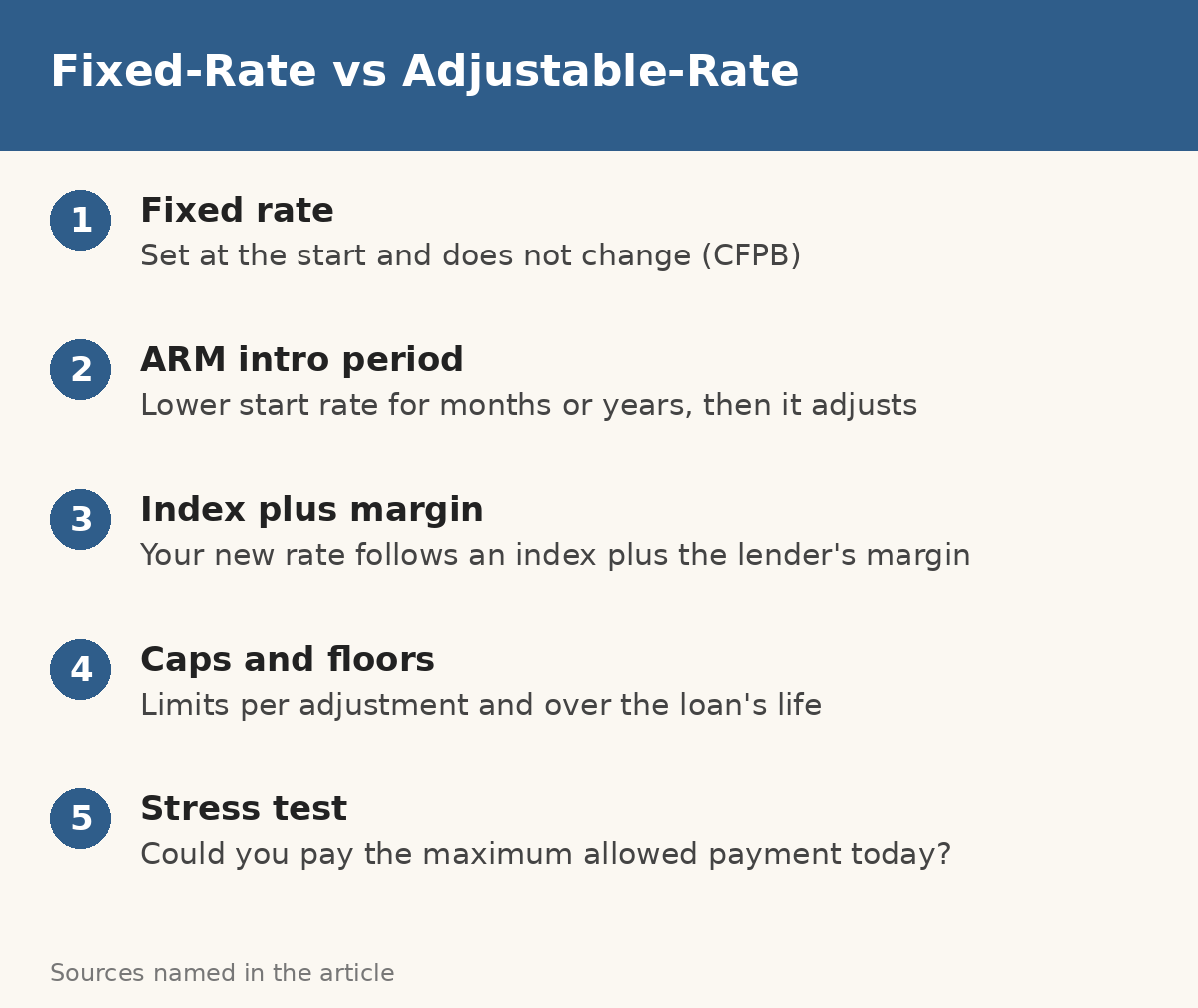
The CFPB explains that with a fixed-rate mortgage, the interest rate is set when you take out the loan and does not change. With an adjustable-rate mortgage (ARM), the rate can go up or down (CFPB: Fixed-rate vs ARM). Even with a fixed rate, your total monthly payment can still change if your property taxes or insurance change.
How an ARM moves
Many ARMs start with a lower rate than fixed-rate loans. That opening rate may last months, a year, or a few years. After the introductory period, the rate changes at regular intervals, and the CFPB notes your payment is likely to go up.
Three terms decide how far:
- Index: a broad measure of interest rates that your rate is tied to.
- Margin: percentage points the lender adds to the index.
- Caps: limits on how much the rate can rise at one adjustment or over the life of the loan. Some ARMs also set a floor. The first adjustment’s cap can differ from later ones.
Your new rate is the index plus the margin, subject to the caps.
Don’t count on selling or refinancing in time
The CFPB’s key warning: do not assume you can sell or refinance before the rate changes. Home values can fall and your finances can change. If you could not afford the higher payment on today’s income, the CFPB suggests considering a different loan.
Questions to ask before choosing an ARM
Based on the CFPB’s checklist, ask the lender:
- How high or low can my rate and payment go at each adjustment?
- How often does the rate adjust?
- How soon could my payment go up?
- Is there a cap on how high the rate can go, and a limit on how low?
- Could I still afford the loan at the maximum rate and payment the contract allows?
How to decide
A fixed rate gives predictability. An ARM may cost less at the start but carries the risk of higher payments later. Compare offers on the Loan Estimate you receive, and get pre-approved first so you know your real budget. See Mortgage Pre-Approval Explained and Credit Score Before a Mortgage. If you are still deciding whether to buy at all, start with our rent vs buy framework.
FAQ
Can a fixed-rate mortgage payment change?
The interest rate cannot, but the CFPB notes the total payment can change with taxes or insurance.
Will my ARM payment go down if rates fall?
Sometimes, but not with every ARM. Some set a limit on how low the rate can go.
What is the margin on an ARM?
Percentage points the lender adds to the index to set your rate.
Does this apply in Canada?
This guide follows US CFPB guidance. Canadian mortgages use different terms, so check with the Financial Consumer Agency of Canada.
Last checked: 16 November 2026 against the official sources listed below. Rules and figures change; confirm before you act. Educational only, not financial, tax or legal advice.
Comments
2 responses to “Fixed-Rate vs Adjustable-Rate Mortgage: How to Choose”
[…] If you’re comparing a US-style fixed-rate loan with an adjustable-rate mortgage (ARM), see our guide to fixed-rate vs adjustable-rate mortgages and what to ask. […]
[…] fixed-rate vs adjustable-rate mortgages for more on how ARMs […]