A home inspection before buying is your chance to learn about a house’s condition while you can still change your mind or renegotiate. Here is how it works in the United States and Canada, based on guidance from US and Canadian government consumer agencies.
Make your offer conditional on an inspection
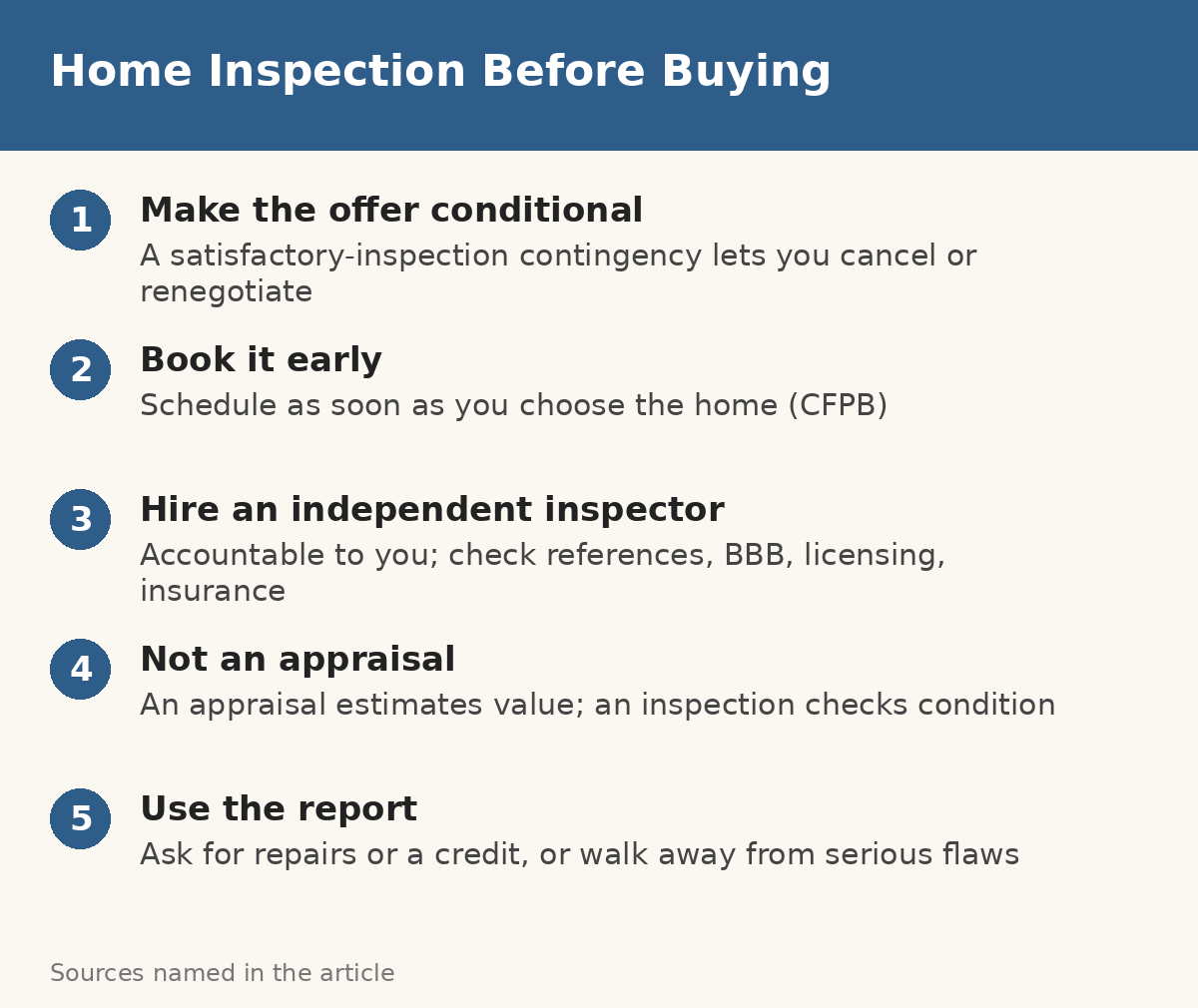
The US Consumer Financial Protection Bureau (CFPB) suggests making your offer contingent on a satisfactory inspection. If the inspection finds serious problems, that condition generally lets you cancel without penalty (CFPB: Find the right home). Canada’s immigration and settlement guidance says the same about Canadian offers: making the offer conditional on a professional inspection lets you cancel or change the offer (Canada.ca: Buying a home in Canada).
Book it early
The CFPB advises scheduling the inspection as soon as you have chosen a home. That leaves time to arrange any extra inspections and to resolve problems before closing (CFPB: Schedule a home inspection). If you are still at the offer stage, see our guide on how to compare house listings.
Choose an inspector who works for you
According to the CFPB, your inspector should be independent and accountable to you. An inspector who is paid by someone else, or who is not paid until closing, may play down problems. Depending on where you live, inspectors may not have to be licensed, so ask previous clients for references and check the Better Business Bureau and your state or county licensing authority. In Canada, the Office of Consumer Affairs notes that not every province or territory regulates inspectors. It suggests checking whether an inspector carries professional liability insurance. It also points to CSA A770, a voluntary national home inspection standard published in 2016 (Office of Consumer Affairs: Home inspections).
Know what an inspection is not
A home inspection is a visual, non-invasive check of a home’s main systems and components. It is not an appraisal. The CFPB explains that an appraiser estimates the home’s market value for the lender, and you are entitled to a copy of the appraisal before closing (CFPB: Your Home Loan Toolkit).
Use the report
If the report shows damaged or worn-out parts, the CFPB says you can ask the seller to repair them or give you a credit. A serious flaw, such as a cracked foundation, may be a reason to walk away. Inspection fees are part of your upfront costs. Canada’s Financial Consumer Agency lists them with legal fees and title insurance among the closing costs to budget for (FCAC: Buying a home). For the US side, see Closing Costs Explained.
FAQ
Is a home inspection required?
Usually not. Canada’s Office of Consumer Affairs says it is not a requirement, but it can save you from expensive surprises.
Can I back out after a bad inspection?
Generally yes, if your contract includes an inspection contingency or condition. Check the exact wording of your contract.
Is an inspection the same as an appraisal?
No. An inspection looks at the home’s condition. An appraisal estimates its market value for the lender.
Last checked: 16 November 2026 against the official sources listed below. Rules and figures change; confirm before you act. Educational only, not financial, tax or legal advice.
Comments
3 responses to “Home Inspection Before Buying: A US and Canada Guide”
[…] See also our guides to closing costs and what happens at a home inspection. […]
[…] An appraisal estimates value for the lender. A home inspection checks the condition of the house for you. They are different reports with different purposes; see our home inspection guide. […]
[…] Home Inspection Before You Buy (US & Canada) […]